
Dr. Reinhold Melcher
Political Scientist | R and Python Enthusiast | Hyphenated Criminologist
Hello there! I’m a postdoctoral fellow at the Saxon Institute for Police and Security Research (SIPS). My research interests include quantitative methods and statistical computing, electoral studies, political extremism and fear of crime. I work with a wide range of datasets using R and Python, including survey, spatial, network, and textual data. In addition to my academic work, I offer freelance data analysis and statistical consulting services for research and applied projects. I have extensive experience in developing research designs for the social sciences as well as in creating surveys and questionnaires. Feel free to contact me if you have any questions about my work or would like to discuss a data project.
Data Analysis & Visualization
Frequentist & Bayesian Methods
Data Scraping & Programming
Confirmatory and Exploratory Research
Sampling Designs & Questionnaire
Academic Publishing & Research Reports
Freelance
I offer statistical consulting and data analysis services for academic and applied research projects. Whether you need help designing surveys, visualizing complex datasets or running Bayesian models — I can help you find clear, data-driven answers.
Services include:
- Research design and survey methodology
- Online survey programming using LimeSurvey
- Data analysis and visualization
- Statistical consulting
- Scientific writing and editing
- Talks and Presentations

Interested? Get in touch to discuss your project.
Job Experience



Recent Publications
Featured Research
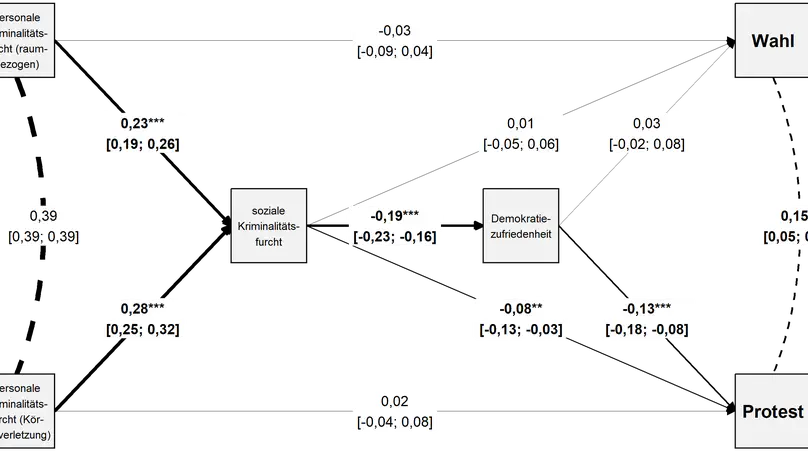
Der Beitrag untersucht mit Daten der SKiSAX-Befragung den Einfluss personaler und sozialer Kriminalitätsfurcht auf Wahlbeteiligung und Protestverhalten. Dabei zeigt sich, dass personale Kriminalitätsfurcht vor allem bei sozial Benachteiligten partizipationshemmend wirkt, während soziale Kriminalitätsfurcht die diffuse Systemunterstützung schwächt und Protestbereitschaft fördert.
Contact
Saxon Institute for Police and Security Research (SIPS)
Reinhold.Melcher@polizei.sachsen.de
+49 (0) 35891 46 2182
Friedenstraße 120, 02929 Rothenburg/O.L., Saxony